Translate It To Your Country Languages !

English French German Spain Italian Dutch

Russian Brazil Japanese Korean Arabic Chinese Simplified
Translate Widget by Google

Thursday, February 9, 2012

Tips To Help You To Be 100 Years Old!

Live to 100, starting today!
Is living to 100 a goal of yours? Even if it's not, these expert tips on living a longer, healthier, and happier life will come in handy.

1. Learn from the pros: A few years back, I did research on centenarians, after deciding that I wanted to live to be over 100 years old (this decision was followed by the decision to live the life I want to live a few years prior to that-so I figured I'd better check out what others are doing). This is what I found: Think more good thoughts, drink enough water regularly, breathe deeply daily, walk regularly, and have friendships.

-Wendy Kay, certified life coach and motivator

2. Be in good spirits: The most essential live-to-100 tip, to me, is recognize that you create your perceptions from the inside out. A person's mood in the moment creates his or her experience; a person's experience does not create his or her mood. Those who understand this live a smooth and stress-free life. They do not play victim to external circumstances.

-Garret Kramer, founder and managing partner of Inner Sports, LLC


3. Take anxiety and stress seriously: Don't just tolerate feeling anxious, stressed, and overwhelmed all the time-find a solution. It's important that you take anxiety (and panic attacks) seriously, if for no other reason than the stress they place on the heart. Recent research found that both women under 50 years of age and postmenopausal women who suffer anxiety and panic attacks may have an increased risk of heart disease.

-Trudy Scott, certified nutritionist, president of the National Association of Nutrition Professionals, and author of The Antianxiety Food Solution: How the Foods You Eat Can Help you Calm Your Anxious Mind, Improve Your Mood and End Cravings


4. Drink water: Start your day with 16 to 32 ounces of water. Fill your tank-your body-with water. If you think you're hungry, drink water. We often confuse hunger for thirst. When you learn to recognize your true thirst 
instinctively, you will begin simultaneously and automatically to reduce your food intake. Water is so beneficial, and if you reach for that instead of any other drink in your lifetime, it will definitely help get
 you to 100!

-Dian Griesel, co-author of TurboCharged who is 50 years old but has a metabolic age of a 17-year-old according to her Tanita body composition

5. Stand up straight: People's bones break down over time with bad posture. Exercises like occasionally running in your bare feet and simple resistance training you can do at your desk or at home are incredibly helpful in preserving posture. For example, relieve chest tightness with self myo-fascial release (use a massage ball or foam roll) and stretching, while strengthening the upper-back muscles. My favorite exercise for hunchback posture is upper-back foam rolling, which anyone can do on the living room floor.

Things You Didn’t Know About the Facebook Like Button

Facebook
It's just a little, clickable icon. But Facebook's "Like" button, with its omnipresent "thumbs up" symbol, has made the company billions of dollars. The story of the button's creation can be traced to a core group of Facebook veterans.

Facebook Director of Engineering Andrew Bosworth posted his version of the button's history on Quora.com in 2010. Bosworth writes that he and a small group of co-workers worked on the project, codenamed “Props.” They debated other ideas including plus/minus signs and star ratings. According to Bosworth’s post, the Like button was originally going to be called the "Awesome" button. Apparently, founder Mark Zuckerberg put the kibosh on that idea.

The idea for the Like button began in 2007, according to Bosworth. There has been some debate over the years over whether Facebook copied the "Like" name from rival site FriendFeed. According to Bosworth, Facebook was working on the concept months before Friendfeed pushed out its own "Like" feature. Facebook unleashed the Like button in February 2009.

Whatever the timing, the success of the button can't be overstated. Rapper Eminem is the most "liked" person on Facebook. As of press time, the Detroit native had more than 52.5 million "likes." Others in his rarefied air include Lady Gaga (47.5 million), Rihanna (50.8 million), and Katy Perry (39 million).

The button itself is clicked millions of times every hour. Facebook doesn't publicly release stats on just how popular the button is, but back in 2010 (which, we admit, is an eon in Web years), 7.6 million pages were "liked" every 20 minutes, according to independent blog Business and Facebook.

According to Facebook's recent S1 IPO filing with the Securities and Exchange Commission, the site's users "generated an average of 2.7 billion Likes and Comments per day during the three months ended December 31, 2011." Break those numbers down, and it comes out to 112,500,000 Likes and Comments ever hour or about 1,875,000 every minute or, to break it down even further, around 31,250 Likes and Comments every second.

Wednesday, February 8, 2012

A Big Breast Made Sex Became More Great!

Time For Sex (Photo: Corbis)
Do not feel inferior when you have large breasts grace. With these assets, it is easy to grasp sexual pleasure.

Many people feel inferior to the ownership of the overly large breasts. In fact, it is important in the capital led to pleasure sex with a partner.

It was like based on a survey that was launched in Miami LatinEuro.com, ie, a site dating from Miami who has more than 20,000 visitors every day. From the survey, women with large breasts were more preferred and get more attention than other parts, such as disitat of Datingnewsnow.

Interestingly, women with large breasts was able to outperform the category Latineuro such as, "Woman with Beautiful Face," "Girl with a Bikini, "" Girls Athletic, "" Black Girls "and" White Women ". However, women Busty (owners of large breasts) are clear winners in 2011. LatinEuro show statistics on men and some women if they prefer large breasted women than other body types. There are some things that say this phenomenon where the amount due to the possibility of plastic surgery.

" Breast Augmentation continues to increase every year more than 300,000 procedures performed in 2011. Breast Enlargement ( Augmentation mammaplasty ) in 2011 more than 300,000 procedures. Year 2010-296203 procedure, the year 2009 to 289.328 procedures, and the years 2000-212500 procedures, "according to plasticsurgery.org.

"This trend will probably increase with the explosion and expansion of Internet dating sites and social networks. Here women can see themselves through the photos and will add oversight of the size of the self-self view and compare themselves to other women. breast implants look great when women wear very dramatic or sexy for the female figure, "said Vania Santos, Director Latineuro.com.

Such as breast implants was carried out by other countries such as Colombia, Brazil, and Dominican Republic. That is because the warm weather climates make them more sensual and the desire to look beautiful with big breasts too high. "big breasts good for dating online to prove that it does not bother the man at all, "added Vania Santos.

Durability Tests That Are Undertaken BlackBerry

Ilustration
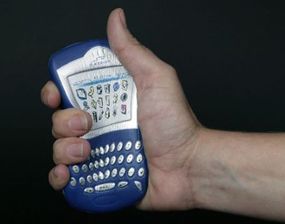
For those of you BlackBerry users, have you ever wondered how the testing conducted by Research In Motion (RIM) BlackBerry device? Well , here's how.

As a user, you certainly hope that BlackBerry devices can be resilient. In a sense, not a fragile gadget is a little damaged.

Maybe after seeing the results of durability tests conducted following RIM, you can be a bit of hope fulfilled. In the video from the official BlackBerry blog, RIM seems to want to make sure that BlackBerry devices are not a cheap smartphone.

For example, when out fell from a height or splashed into the water, Ryan of Hardware Support Lab RIM BlackBerry trial ensures that the device can still be used as usual. Can be used for typing, listening to music and take pictures from the camera.

Yes, in the video, RIM is doing some testing. Such as drop, bend, shake, and plunged into the soapy water BlackBerry device. This is considered a standard test of RIM products. Curious as to what the BlackBerry endurance test. Please watch the following video.


The Parts of Man Body That Woman's Like!

Sexy man (Photo : Corbis)
Did you know what part of men like in a woman's body may have been familiar. But what about the body of a man who liked women? This is the answer!

Nearly every man was curious to find out which body part to make love and passionate woman . Are your arms, chest, or even a hair, it's always a question of mind of a woman's man.

Rather than curious, here's a detailed leak, as reported by Indiansutras.

Shoulder

Shoulder width is defined to excite a woman with ease. Strong shoulders can be reached or carry her to make her crazy. Some women like to rub their hands at shoulder width because it excites them.

Shaped Chest
Shaped chest is every woman's fantasy. Touches the chest of a man while making love to a passion for a woman.

Tongue
Use sensual tongue excites a woman with ease. This is one of the sensual part of the body of man which can make women really enjoy when making love. Best kisser and love to make women feel more sensual than the body of this man.

Dominate The Physical

Most women do not like having sex with skinny men. Handsome man who can control and dominate a woman in bed more to make women feel happy. So, begin to shape your abs to look good because this is an important foundation of the man.

Large and thick penis

Thick penis can stimulate a woman for a few seconds. How? Because the penetration and the feeling that makes a woman passionate about the male body part. Mr P italics added energy to the sex session. This is due to easy penetration into the G-spot stimulation.

Clean and Shaped Back

Just like the chest and flat stomach, she also likes the back of the net. Shaped curve and the shoulder makes her excited.

Does your handwriting really say something about your personality?

Graphologists, or self-proclaimed handwriting experts, claim that it does. Specifically they claim that individuals who share certain personality traits write in a similar fashion, so graphologists analyze handwriting to deduce the character traits of the writer. In the early 1900s, Milton Newman Bunker invented the most common graphology technique called graphoanalysis. (Other methods of graphology predate Bunker’s work.) His approach relies on the stroke shape of the letters. Graphoanalysts look at variables like the upslants or downslants of letters like l, k, and t, the size of the first letter in relation to the other letters, the entire line of writing slanting up or down, and the shape of ending strokes of letters like s and e, among many other aspects.

Does how you write a word have a relationship to what word you are writing? Is penmanship considered part of language by linguists? Graphology focuses on about the meaning of appearance of your letters, not about the great or not-so-great sentence you’ve strung together. Linguists study these elements, too, but not to derive some psychological insight.

In linguistics, pragmatics is the study of how context influences meaning. Consider two examples:
Your friend says “You look great” when you just fell in a mud puddle.
You read the words “You look great” in a romance novel.

Context crucially affects the meaning in both cases. Likewise, handwriting can establish context and influence the meaning of writing. Messy or pristine, the visual nature of words can be an implicature, “anything that is communicated but is not explicitly stated.” For example, if your mom says “The phone is ringing,” she might mean “Please answer the phone.” You can infer what she means because the phone is ringing while she says it and perhaps she has said it in the past, hoping you would answer the phone. You make assumptions about the nature of a writer’s message based on how his or her writing appears.

But can handwriting analysis actually provide scientifically-proven insights about personality? Sorry. Graphology has not been proven in any substantial way to predict or identify the character traits of an individual. Psychologists have researched connections between the elements of handwriting and personality tests like the Myers-Briggs Type Indicator, and their results have shown no correlation.
Don’t confuse graphology with graphemics, which is the study of writing systems and their relationship to speech. Nor should you could confuse it with forensic document examination, the analysis of potentially fraudulent documents in court cases. Those forensic analyses attempt to identify the author of a document by comparing an individual’s handwriting in multiple instances to prove if they wrote a letter, signed a check, or forged someone else’s signature.

Does your experience contradict what science has to say? Has the character of a person’s handwriting ever taught you something about the writer’s personality?

Autocorrect: How does it work? Do we need it?

Autocorrect is almost as old as personal computers. Even some of the earliest word processors had a spellcheck feature that suggested alternative words if a word you typed did not appear in its internal dictionary. Certainly, today, autocorrect has a come a long way since the Cupertino effect. What’s the Cupertino effect? Well, in its early days, word processors would replace the word “cooperation” with “Cupertino” (the city in Northern California where Apple and other computer companies are headquartered). This spelling suggestion made its way to many documents published by the United Nations, NATO, and other official bodies, so the Cupertino effect is any inappropriate suggestion or autocorrection made by a spellchecker.

In the beginning autocorrect was primarily a smart spellchecker. If you typed “bfeore,” it replaced it with “before.” Then in 2007, Microsoft introduced the “contextual speller” (also known as Grammar Checker) for Office, and squiggly green lines began appearing in our Word Docs. Those green lines signified a problem between words not with just one word. So, if the verb of your sentence was not correctly conjugated for the subject, it would suggest a replacement. As in, “I leaves the office at 5” would be corrected to say “I leave the office at 5.” It could also correct words that were next to each other. For example, if you typed “shew ent”, it replaced it with “she went.”

Google Docs has taken a slight different approach. In addition to offering spellcheck suggestions, it allows you to customize autocorrect, so that you can program abbreviations that you use often. You can instruct it to always replace NY with “New York” for example.

In the past two years smart phones have transformed (and some would say mangled) the English language with their autocorrect suggestions. They now suggest and automatically replace words as you type them. As you may have experienced, this can lead to some very serious miscommunication. (You can find numerous examples at the blog, Damn You, Autocorrect.) Smart phone autocorrect works a little differently than the traditional tools in a word processor. Because smart phone keyboards are so tiny and close together, autocorrect suggests alternative words that contain letters near the letters in the misspelled word. This means the range of error is much larger than with traditional autocorrect which is relying primarily on a dictionary and grammatical algorithms, rather than on letter proximity. Maybe this all means that we should read our e-mails and text messages ourselves before hitting send.

How do you technically describe what autocorrect does? Metathesis is the changing of one letter or sound for another letter or sound. Anatypsis is the insertion of a vowel in the middle of a word, more broadly called epenthesis. A paragoge is an addition of a sound at the end of a word, rather than the middle. So if you make an embarrassing autocorrect error, maybe using these terms to describe what happened will help you save face.

Do you have any stories about autocorrect incorrectly changing your words? :P :D

Does your language affect your bank account?

New research argues that the answer is yes. Depending on what language you speak, you are more – or less – likely to save for retirement. Your primary tongue may even affect how much you weigh.


In January, M. Keith Chen, an associate professor of economics at the School of Management at Yale University, published a working paper on his research about the effect of language on economic behavior. Chen zoomed in on one aspect of language: how we deal with time. Each language organizes and describes the future differently. Linguists call this distinction future-time-reference (FTR, for short). Some languages, like German, have a weak-FTR, which means that the distinction between today and tomorrow isn’t very concrete. In his paper, Chen gives the example that in German, you can say, “It rains tomorrow” whereas in English you have to say, “It will rain tomorrow.” English is a strong-FTR language because there are clear, constant grammatical distinctions between today and tomorrow.


Analyzing retirement savings’ patterns, along with health habits, Chen found that people who speak weak-FTR languages prepare more thoroughly for the future than people who speak strong-FTR languages. In fact, weak-FTR countries save, on average, 6% more of their GDP every year. They also smoke less, exercise more, and are less likely to be overweight.


Chen also analyzed the data accounting for variables like gender, age, and religion, to isolate language as the primary factor. Even in these analyses, people who spoke weak-FTR languages outperformed their strong-FTR peers.


This particular phenomenon is an example of linguistic relativity, or how languages affect how we think.


Sunday, February 5, 2012

Twitter Is Harder To Resist Than Sex, Study Finds


People may experience strong urges for sex and sleep over the course of the day, but the urge to check Twitter and other social media sites is actually more difficult to resist, according to a new study scheduled for publication in the Journal of Psychological Science.

For the study, researchers gave BlackBerrys to 205 people between the ages of 18 and 85 in the German city of Wurtzburg and monitored them for seven consecutive days, according to the Guardian.

Seven times per day, participants were asked to send a message describing the type and strength of urges they had experienced within the last 30 minutes.

Researchers evaluated the responses -- all 10,588 of them -- and discovered they were more likely to give into the urge to check social media sites like Twitter, especially as willpower dwindled over the course of the day.

In contrast to prevailing beliefs that people experience irresistibly strong desires for tobacco, alcohol and coffee, most participants reported feeling relative low urges for those substances, head researcher Wilhelm Hofmann told the Guardian.

"People were relatively successful at resisting sports inclinations, sexual urges, and spending impulses, which seems surprising given the salience in modern culture of disastrous failures to control sexual impulses and urges to spend money," Hofmann added.

Of course, Hofmann pointed out, sex and other strong urges reported by participants are a lot less accessible during an average day than social media.

But the study draws comparisons between social media and alcohol or cigarrettes as well, Dave Thier pointed out in Forbes.

"There's also the argument to be made that social media is just as harmful, forcing someone to recede from the world and into a safe little bubble of status updates and tweets, where human beings aren't troublesome animals but easily compartmentalized profiles," Thier wrote in a blog post on the study. "But it's a little easier to make the harm argument with cigarettes."

Schools might want to take that point into consideration when planning substance abuse curriculum, considering the number of young people signing up for Twitter, Facebook and other social networks. According to the Pew Internet & American Life project, 16 percent of young people ages 12 to 17 reporting using Twitter, up from 8 percent just two years before.

Among college students, social networking is such a huge part of daily life that people deprived of the Internet exhibit symptoms similar to drug withdrawal, researchers found last year in a study that asked college students around the world to go 24 hours without the web.

"Students talked about how scary it was, how addicted they were," lead researcher Susan Moeller told the Telegraph. "They expected the frustration. But they didn't expect to have the psychological effects, to be lonely, to be panicked, the anxiety, literally heart palpitations."

Meet BreathalEyes, An iPhone App That Tells You How Drunk You Are


If you're like me, when you go out drinking, you like to be able to place a precise numerical value on how drunk you are at all times.

Well put down your calculators because here's a new app that can do just that.

Introducing BreathalEyes, an app for the iPhone and iPod Touch that will tell you, using science, precisely how stinkin' hammered you have become at any given moment. BreathalEyes accomplishes this magic in a rather ingenious way, by tracking the movements of your eyes in order to determine the extent of your intoxication; you simply have a friend or bartender point the iPhone's camera at one of your eyeballs, so that BreathalEyes can "scan...the eye to detect and analyze [your] Horizontal Gaze Nystagmus (HGN)," thereafter delivering a numerical BAC that the app's makers claim to be accurate within .02 percentage points.

As a bonus, the calculation is done within the app itself, with no need for Internet connection over WiFi or 3G; per the description in the App Store, BreathalEyes can "approximate an intoxicated individual's blood alcohol content (BAC), anytime and anywhere," which is perfect for astronauts, submarine crew members, and people who like to get drunk in elevators.

Unconvinced? Check out this primer video made by the folks at Xplor Apps, which explains how one might use BreathalEyes to determine his or her drunkenness:


Note: While the video and app info page both feature a warning that BreathalEyes is "for entertainment purposes only," a PR rep for the company assured me in an email that it was "only for legal reasons we have to add a disclaimer, even with the real science behind this."

We tried the BreathalEyes app at a recent HuffPost Happy Hour, and we found that, while the app reliably gave higher scores to those who were boozing than those who were abstaining, it still gave a 0.05 BAC to several ladies and gents who were stone-cold sober. It's not quite a science yet, in other words, but it is a fun party trick.

You can download BreathalEyes for $0.99 in the iTunes Store. Use it responsibly, and don't use it to determine whether or not you're good to drive. If you're depending on an iPhone app to tell you if you're too blitzed to operate your car, then the answer is probably no, anyway.

How Cool Is That Huh?

Chefs’ Secret Ingredients that Every Kitchen Needs

Chef Dale Talde, who competed in Top Chef Season 4, is a whiz at using Asian spices and condiments to coax maximum flavor out of his dishes in breakneck speed. "In many Asian countries it's too hot to use an oven, wok cooking is quick cooking," Talde told Yahoo! Shine. "'Low and slow' means an hour, versus seven hours in European cuisine."

At his brand new Brooklyn restaurant, Talde, he uses savory pantry ingredients, such as fish sauce and dried shrimp, to attain deep flavors in his dishes, a technique home cooks can adopt for quick weeknight meals. "Chefs understand that salt is the basis of most flavor and you can't be afraid of it," says Talde. He explains that home cooks can give their food a salty richness by reaching for kitchen basics such as soy sauce, mustard, and Worcestershire sauce.

We asked Talde and other great chefs to share their magic ingredients. Here are their best-kept secrets; now we'll have to kill you.

Fish sauce. This Vietnamese condiment is made from fermented fish. Don't be scared: Talde calls the Asian cooking staple his "number one ingredient" right now. He recommends adding just two or three drops to a seafood risotto or other fish dish to enhance flavor. It can also be used in soups, dressings, sautés, and dipping sauces.

Dried shrimp. Adding a small amount of dried shrimp will give speedy entrees and broths a caramelized richness. Talde likes to use dried shrimp in gumbo and beef stir-fry. He says mixing salty fish flavors with meat is what makes "surf and turf" so delicious. If you don't have access to an Asian market, you can purchase dried shrimp online.

Parmesan rind. Buy wedges of Parmesan cheese instead of pre-grated. Not only does it taste better when you grate it yourself, Talde says adding a chunk of Parmesan rind to any soup will give it a "whoa" flavor. Store inch-long pieces of rind in the freezer.

Tomato paste. Chef Quinn Hatfield, of Hatfield's in Los Angeles, which was named one of Bon Appetit Magazine's 10 best new restaurants of 2010, says tomato paste is a pantry must. You can use it to make a quick tomato sauce or spread it on fish before grilling to add sweetness. Tomato paste gives dimension to other mild proteins such as grilled chicken breasts without many calories and no fat. Look for tubes, which are more convenient to use and store than small cans.

Greek yogurt. Hatfield also recommends keeping a tub of Greek yogurt in the fridge. He suggests using it in place of mayo in pasta and potato salads. He also uses it to "finish marinades, vinaigrettes, and soups—pretty much across the board," he says. "It adds texture and a nice tang."

Sherry Vinegar. Chef Jesse Schenker, of Recette in New York City, recommends a splash of sherry vinegar to "brighten up" the flavor of savory dishes from soups to grains to vegetables. He also offers this tip: "More importantly, it can be used to correct a dish that is too salty or too sweet."

Balsamic Vinegar. Dan Silverman, chef at the Standard Grill in New York City, likes balsamic vinegar for its "sweet/sour acidic punch," which he says can liven up any meat sauce or braise. It's especially good with dried beans such as lentils. He thinks it makes the perfect vinaigrette, and he also reduces balsamic vinegar to a syrupy sauce for pork and poultry.

Apple Cider Vinegar. This tart but mellow vinegar is popular with award-winning southern chefs Harrison Keevil, of Brookville Restaurant in Charlottesville, Virginia, and James Boyce, of Cotton Row in Huntsville, Alabama. Boyce adds a splash to creamy soups to cut the fat and add a layer of flavor. Keevil uses it to round out the bitterness of winter greens such as collards and cabbage.

Honey. Americans love sweet flavors and a small amount of sweetener can make almost any dish from vegetables to stews more appealing. Keevil adds a bit of honey or Virginia maple syrup to most of his savory dishes for complexity. Another Top Chef alum, Manuel Trevino, of Marble Lane in New York City, adds honey to soups, stews, and sauces to balance out acidic flavors.

Fennel Pollen. This spice sounds esoteric, but Chef Laurent Tourondel, of BLT American Brasserie, assures Yahoo! Shine it is super versatile. He adds it to seasoning mixes for meat, poultry, and seafood, and sprinkles it on roasted vegetables, pizzas, and salads. Tourondel says, "Fennel pollen has delicious notes of licorice, honey, and curry and works well on just about any food." If you can't find fennel pollen at a gourmet market, you can purchase it online. It's pricey, but all you need is a tiny dusting.

Quatres épices. Another spice that's not commonly used in American kitchens, but should be, is a blend of nutmeg, white pepper, ginger, and ground cloves. It's a staple in France and the Middle East. Philippe Bertineau, Executive Chef at Benoit in New York City, says, "This simple secret ingredient is a magical seasoning for meats. It gives them a kick and draws out their essential flavors in earthy stews, soups, and ragouts." You can purchase quatres épices, which literally means "four spices" online.

Salt. The simplest way to get maximum flavor from your food is to add enough salt. Chef Benjamin Lambert of Wit and Wisdom, at the Four Seasons Hotel in Baltimore, says, "Salt is an essential ingredient that the body needs. Adding salt by a ratio of just one percent of the weight of your other ingredients will bring out their natural flavors. Two percent is actually what most restaurants use." If you are concerned about your sodium intake for health reasons, Lambert suggests cutting back salt in your recipe, but using a light sprinkle of good quality, flakey sea salt, such as Maldon salt, to finish the dish before serving

Saturday, February 4, 2012

Study: Sex with Your Ex Can Be a Good Thing!


If you think friends with benefits sounds complicated, imagine being divorced...with benefits.

Having sex with your ex-a la the 2009 movie "It's Complicated" starring Meryl Streep and Alec Baldwin as exes who start sleeping together years after they divorce-can rehash a whole mess of mixed feelings. (At least that's what a host of self-help authors say.)

Now, a new study coming out in the Journal of Social and Clinical Psychology suggests that sex with your ex may not be as bad as you think.

Researchers at the University of Arizona looked at post-breakup psychological adjustment and ongoing contact among 137 married adults who had recently separated. As you'd expect, people who accepted the breakup were generally better adjusted while those who still pined for it weren't.

But that's not all: for those who didn't accept the breakup, making a clean break (the advice everyone gives after a breakup) didn't leave them any happier than trying to keep up a friendship. And if they stayed in touch with their exes, they were actually doing better if they kept having sex with their partner.

"Sexual contact with an ex-partner seems to be associated with better well-being for those who aren't over the relationship," says lead author Ashley Mason, a clinical psychology PhD candidate. (YouBeauty Relationship Expert David Sbarra is a co-author on this study as well.)
Why? Most likely, it's simply that their actions match their feelings.

"Their psychological attachment to their ex-partners is still that of a lover," says Mason. "So if they're still having sex with their partners-a type of contact we usually only have with lovers-then their attachment to and behavior toward their ex-partners are in line with each other." In other words, if you want to be in a relationship but you've settled for sex, then at least one part of your wish has come true.

Of course, having sex with your ex shouldn't be seen as a cure-all.

"I would not suggest that people run out and start having sex with their ex-partners," says Mason. "Continuing to sleep with an ex could be preventing one from starting a new relationship that might be beneficial." (Feeling used comes to mind as a probable downside as well.)

But if you've unwillingly untied the knot and you decide to keep it carnal, you may actually find you're doing better-at least for a little while.

Facebook IPO: Buy or Beware?


Now that everyone on earth has offered their 2-cents on the upcoming Facebook IPO, one question remains: Should you buy shares when the social networking king becomes a publicly traded company sometime in April or May?

Since we still don't know the official share price, what the total company will be valued at, or even an estimate for what the company will be earning this year, some assumptions must be made. Running through the documents released this week and what we know so far, I'm going to use the following key metrics based on what we do know about Facebook:

* The total company will be valued at $100 billion. (That's worth almost twice as much Boeing and about three times the value of Starbucks.)

* Facebook will have 1-billion Monthly Average Users at the time of the IPO or shortly thereafter.

* Each of those billion users will generate about $4.25 per year for Facebook (roughly the same as what they were worth in revenues to Facebook during 2011, according to Facebook's S1).

* Facebook's margin will remain about 30%.
That works out to a company that earns nearly $1.3 billion on $4.25 billion in revenues. At $100 billion total value Facebook will be trading at a Price to Earnings multiple, or P/E, of 77 and Price to Sales multiple of around 25.

None of which means anything in the abstract. For perspective I'll compare Facebook to Google (GOOG), the company whose IPO hype and business model that Facebook most closely resembles. Also FB is set to dethrone Google as the largest Internet IPO ever.

When Google went public in 2004 the company was valued at a similar P/E but at a mere 5x sales. The fact that Google is trading nearly $600 per share compared to its IPO price of $85, the Facebook pricing looks compelling, but only because we're applying the success Google's had over the last 8 years to what's going to happen at Facebook after it goes public. Doing so overlooks just how incredible, and hard to replicate, Google's run has been.

Google's IPO worked for long-term investors because the search engine literally became one of the best companies on earth. Google's price has gone up 7-fold since the IPO but the company has grown into it's expensive initial price.

The year of its IPO Google earned roughly $400 million on $3.2 billion in revenues. In 2011 the company reported $38 billion in revenues and earned nearly $10 billion. That works out to growth rates of over 36% per year on revenues and 39.7% on earnings.

Google's stock now trades at a P/E of 20 and P/S of 5. In other words, despite the eye-popping returns on Google's stock the company has actually gotten less expensive by the calculations of Wall Street.
Making the idea of buying the Facebook stock on the day of the IPO look even worse, Google's offering was rather famously bungled in terms of getting the maximum value for company insiders.

There are no signs of that being the case with Facebook, suggesting the measures used above will only apply to folks well-connected enough to pay the listed price for FB shares. Retail buyers (read: anyone who calls a broker or buys shares online) will have to pay-up anywhere from 20 - 40%.

Other differences are that the Google business model doesn't go out of fashion and doesn't require individual user input to make it a compelling offering for advertisers. Google looks at what people search for and sells ad space accordingly.

Facebook lures users into joining a club, determines what products customers may be interested based on what customers say, and then sells ads.

Facebook knows the kind of person you'd pretend to be at you high school reunion. Google knows the real you. The latter is far more valuable.

Facebook is also a far more mature company than Google was when it came public. With our assumption of 1 billion users Facebook will have captured 14% of the entire planet. Men, women, children living in the industrialized world or places where the Internet isn't even a dream. 14%. That doesn't leave a ton of growth for new shareholders.

Bottom Line: Facebook isn't Google, despite the surface resemblance. New shareholders could clearly see where Google could go with their business model (more searches means more ad dollars). For Facebook to replicate the growth of Google's stock will require an ongoing reinvention of the Facebook model as growth in the number of users caps out.

Sometimes it's better to watch a story play out than it is to put your money on the line based on hope and a love of the product. Take a pass on Facebook shares until the IPO dust has settled. If the company is going to be the next Google there will be plenty of time to buy shares.

Wish List For The iPhone 5


I was really close to upgrading my iPhone 4 when the 4S launched last year.

Not because I was dying for the upgrade, but because I was getting sick of AT&T's horrible service in New York. I wanted an excuse to make the move to Verizon.

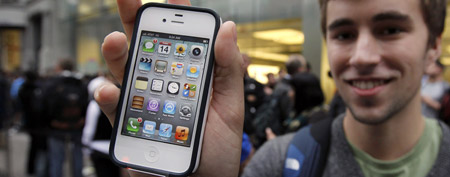
But for me, the upgrade didn't make sense. I, like many other current iPhone 4 owners, was hoping for a bit more from Apple.

Luckily, it looks like the next iPhone could arrive as early as this summer, according to some new rumors. I might not have to wait as long as I thought.

Before I do upgrade though, I have a few demands for the next iPhone. Keep reading to see what I want.


It's time for Apple to finally adopt 4G

I can understand why Apple was hesitant to add 4G LTE to the iPhone 4S. It's a battery hog. The chips necessary to hop on 4G networks could've made the iPhone thicker instead of sleek and thin. Basically, the same reasons it waited an extra year to add 3G to the iPhone.

But now it's time for Apple to get on board. I've used Verizon and AT&T's LTE networks on several different Android devices and the speeds are incredible. At times, it can be as fast as your Wi-Fi connection at home. If Apple skips LTE again this year the iPhone will look antiquated compared to the competition.

A 4-inch screen


Every time I test a new Android phone with a 4-inch (or larger) screen, I find it hard to adjust when I return to my iPhone's tiny 3.5-inch display. After using every screen size imaginable, I think 4 inches is the true sweet spot for a smartphone. With all the video watching and gaming we do on our phones, it'd be nice to have some extra real estate on the display.

It should play HD video


The resolution on the iPhone 4 and 4S is incredible thanks to the fancy Retina Display. But unlike a few premium Android phones out there, the iPhone still can't display true HD video. (For example, the Galaxy Nexus plays gorgeous 720p HD video.) I'd like to see the same on the iPhone 5.

A faster processor for better graphics and speed


With rumors that the iPad 3 will get a zippy new processor, it's likely the iPhone 5 will get the same one when it launches later this year. After all, that's the pattern Apple followed with the iPhone 4 and 4S. I'd be shocked if this didn't happen, especially with so many competing smartphones rocking processors that are already faster than what the iPhone 4S has.

It also needs more memory


I was a bit surprised when the iPhone 4S launched with just 512 MB of memory. Most experts thought it'd have twice that. Memory helps with advanced stuff like running several apps at once, so I'm hoping the iPhone 5 gets a boost.

Multitasking is still pretty awful on the iPhone


I think Apple did a halfway job when it added multitasking to the iPhone almost two years ago. Right now, running apps live in a tray you access by tapping the home button twice. If you want to close them, you have to painstakingly do so one at a time. It's annoying. I'm hoping Apple comes up with a better solution this time around.
The photo here shows a nice tweak jailbreakers use to handle multitasking on iPhones. Perhaps Apple could learn from this.

After two years, it's time for a fresh design


Even I was a bit disappointed after waiting more than a year for the next iPhone just to find out Apple only made internal upgrades. After two years of the same iPhone 4 design, I want something new before I upgrade. Chances are pretty good that Apple will deliver.

Better battery life


Compared to most touchscreen phones, the iPhone's battery life is already pretty good. But if Apple is in fact going to add a larger screen and a 4G LTE chip, it'll have to give the battery a nice boost to compensate.
By the way, we've already seen that this is possible with Motorola's new Droid Razr Maxx. That phone runs on Verizon's 4G LTE network, yet can last more than a day on one charge.

Built-in integration with Facebook, LinkedIn, Dropbox, and other popular web services


Sorry Apple lovers, but I'm about to make another Android comparison. One of my favorite things about Google's OS is that it allows for deep integration with a wide range of popular social networks and web services. All you have to do is install an app, and it's immediately a part of your phone.
Apple got a nice start by integrating Twitter into the iPhone, but I want more: Facebook, Evernote, Dropbox, LinkedIn, you name it. We use such a variety of services these days, it'll be nice if our iPhones made it easier to share.

Fix iMessage!


While we're big fans of iMessage, there are still a bunch of annoying nuances we're dying for Apple to fix. First of all, there's no way to block people from sending you iMessages without completely shutting the service off. iMessages can also get lost if you switch phones and another user tries to send one. Finally, there's a problem where iMessage can tie itself to your device, causing your messages to get sent to the wrong person.

We'd also like to see Apple to take iMessage a bit further, adding a BBM-like buddy list for your friends and an app for Macs and PCs.

Liquipel Waterproof Coating on the iPhone 5?


Last month we reported that the iPhone 5 might come with HzO coating which would make the device waterproof. Now we’re hearing that the iPhone 5 won’t be coming with the HzO coating after all–rather, according to a source that has proven to be reliable in the past, the iPhone 5 will ship with Liquipel waterproof coating pre-applied.

What’s more, the iPhone 5 reportedly won’t be the only nor the first device to come with pre-applied Liquipel as it’s rumored by the same source that the Samsung Galaxy S III will also come with the coating. The Galaxy S III should hit stores before the iPhone 5, with a spring 2012 release planned for the Samsung phone.

Changes in Insurance Wording Indicate Waterproof iPhone 5

The source, an unnamed person involved in U.K. retail, told Today’s iPhone that “both (the Galaxy S III and the iPhone 5) will have had Liquipel treatment as they’ll be altering the wording on insurance.” The change in wording is necessary, as current phone insurance plans generally do not cover water damage; however, if the phone is considered to be a water-proof device, this would mean that, in theory, any water damage to the water-proof phone would be considered a defect with the phone itself. This would mean that water damage to a water-proof phone like the iPhone 5 would be covered by insurance.

According to the source, the fact that they’re altering the wording on the insurance is what indicates that the iPhone 5 will come with waterproof technology. The only question is, what waterproof technology will be used? Currently, all signs point toward Liquipel, who have made no secret of the fact that they would like to work with phone manufacturers to have their product pre-installed on devices.

How Liquipel Coating Waterproofs the iPhone (and other devices)

Liquipel made their debut at the 2012 Consumer Electronics Show (CES) and is said to have impressed manufacturers with their waterproofing technology. According to Liquipel’s website, the waterproof coating is not visible to the human eye (it is see-through) and doesn’t make any device it is applied to any heavier.


When applied to a device like the iPhone, the coating is said to completely block water from seeping into the iPhone 5 and destroying any of the delicate hardware within the device. This means that consumers who accidentally drop their iPhone 5 in something as small as a puddle of water or as large as a toilet won’t have to worry about the device ceasing to function afterwards. Instead, the Liquipel technology will keep the iPhone 5 working despite the water that surrounds it.

Liquipel currently applies the coating to the iPhone 4S–as well as a variety of other phones–at a cost of $59. To have the coating applied to the phone means shipping the device to Liquipel and waiting for them to apply the coating and ship the device back to you. Obviously, it would be much more convenient–and probably cheaper–if the technology was applied during the manufacturing process.

Spain: What the 'Mona Lisa' Contemporary Copy Reveals


The most mysterious painting in the history of European art just got a little more mysterious. For centuries, Madrid's Prado Museum has held what was believed to be a mere replica of Leonardo da Vinci's masterpiece, the Mona Lisa. But researchers at the museum recently discovered that their copy wasn't just any copy. Thanks to the use of infrared technology, they deduced that the work was not only painted in Leonardo's workshop, by one of his students, but that it was done at the same time as the master was completing the original.

Although the copy, which depicts La Gioconda with a narrower face, redder dress and significantly more pronounced eyebrows than the original, has been in the Prado's collection for centuries, no one thought much of it, and it was generally attributed to an unknown Flemish artist. But when the Prado's conservators began to study it in preparation for an upcoming show in Paris, they realized there might be more to the work than previously recognized. Using infrared technology, they detected a lush Tuscan landscape -- the same as in Leonardo's original -- hiding beneath the coat of black varnish that had been added probably in the 18th century and obscured the original background.

That wasn't all they found. Infrared reflectography can reveal the sketches -- called underdrawings -- and changes that a painter makes in the course of composing a work. By comparing reflectography images taken of the Mona Lisa in 2004 with the copy (they matched), Prado conservators determined that the replica was painted while Leonardo was himself still at work on the original. "There is textual evidence from contemporary observers that Leonardo had assistants in his workshop making copies," says Miguel Falomir, the Prado's curator of Italian Renaissance art. "This is the first time we've found technical evidence of it as well."

The painting is still being cleaned and restored, but the findings were presented two weeks ago at a technical conference for specialists held in conjunction with the blockbuster Leonardo exposition currently on show at the National Gallery in London. The reaction from experts in the field has been unanimously positive. "So far, I haven't heard one discordant voice," says Falomir.

Which isn't to say that the discovery hasn't raised questions, including who painted it and when. "It had to have been a pupil, and someone very close to Leonardo at the time," says Matthew Landrus, art historian at Oxford University and the Rhode Island School of Design. "And no one was closer than Andrea Salai and Francesco Melzi." Still, he points out, that there is no definite evidence of their work. Salai, who some historians believe became Leonardo's lover, entered the workshop in 1490; Melzi, who the Prado believes to be the likelier author, joined around 1506.

But the bigger question is why Leonardo would have had his students replicating his work in the first place. Certainly the practice of making copies was not unique to him; many Renaissance artists had their students attempt to recreate their work. The reason may have been pedagogical, but more likely, says Falomir, it was financial. "When people think about these great geniuses creating, they forget that even these artists had to eat. Selling copies was a way of earning money."

Landrus suggests it may have been more than that. After all, the Mona Lisa was still in Leonardo's possession when he died. It was never turned over to Francesco del Giocondo, the man who, according to 16th century biographer Giorgio Vasari, had commissioned the portrait of his wife, Lisa Gherardini, in celebration of the birth of their second son. "It's possible that Leonardo realized, 'Hey, I've got a pretty good painting here,' and had the copy made so he could keep something for himself," says Landrus. "Only later did he recognize that he didn't have to give the original away."

But Alison Wright, a specialist in Italian art at University College London who attended the meeting where the Prado discovery was presented, sees the copying as contemporary recognition of Leonardo's importance. "It's just conceivable that there was a copy made to sell, but it's an odd painting, and a commissioned portrait, so it's hard to imagine what the market would be," she says. "It's more likely that it was a matter of Leonardo's students recording his every movement, even while they were still falling from his brush."

The discovery is already causing art historians to re-examine their understanding of how Leonardo's studio functioned, and to revise the picture they have of how the most famous painting in Western art captured a singular moment between sitter and artist. "Once again," says Wright, "we see that technical analysis can shed light on a case we thought was shut."

But if the Prado copy raises new mysteries, it also clarifies some things. The newly restored copy, with its gleaming landscape in the background and sharp lines defining the spindle of the chair and the ruffle of the bodice, fills in details obscured by the yellowing varnish on the real Mona Lisa. "The original hasn't been restored in a long time," says Prado curator Falomir. "The copy invites you to see it with new eyes."

Friday, February 3, 2012

Is Your Computer Harming Your Health?

A digital malady called “iPad shoulder” joins computer vision syndrome, BlackBerry thumb and E-thrombosis on the list of odd—and often painful—disorders afflicting our increasingly wired society.

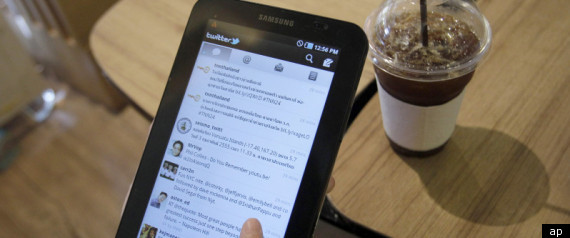
In a new study, researchers at Harvard’s School of Public Health report that the millions of Americans who use tablet computers, such as the iPad, risk shoulder and neck injuries because of the way they hold the high-tech devices. In the study, 15 experienced users performed a range of simulated tasks on an iPad 2 and Motorala Xoom while their postures were analyzed with a 3-D motion analysis system.

While using the tablets, the volunteers bent their necks more, compared to using a desktop or laptop device, especially when the tablet was in their lap. That hunched posture strains the neck and shoulders, the researchers say. They advise tablet devotees to change positions every 15 minutes, move their neck around to release tension, and to use a case to prop the iPad at the preferred angle of 30 degrees.

Computer Vision Syndrome

Marked by dry eye, neck and shoulder pain, blurred vision, eyestrain, and headaches, computer vision syndrome (CVS) is sparked by overuse of computers, particularly desktops with large screens. While it’s usually temporary, severe cases can be extremely debilitating, says Roy Chuck, MD, PhD, Chairman of Ophthalmology and Visual Sciences at Montefiore Medical Center in NY. The best ways to relieve or avoid CVS are better posture, using a smaller screen, improving lighting to reduce glare on the screen, taking frequent breaks, and ultimately, decreasing computer use, says Dr. Chuck.

E-thrombosis

Long airline flights aren’t the only risk for deep vein thrombosis and pulmonary embolism (DVT/PE, potentially fatal blood clots that form in leg veins and travel to the lungs). In 2003, Australian researchers report that a 32-year-old man nearly died from DVT/PE after spending up to 18 hours a day parked in front of his computer, the first reported cases of what’s been dubbed e-thrombosis.

The research team then reviewed medical charts at Wellington Hospital and found many additional cases of e-thrombosis among heavy computer users who lacked other risk factors for DVT, leading them to theorize that this potentially lethal disorder may actually be relatively common. Up to 600,000 Americans develop DVT/PE annually, the CDC reports, and 20 percent of them die. It’s not known how many cases are linked to heavy computer use. To prevent e-thrombosis, get up and move around every hour or two while using your computer.

BlackBerry Thumb

Aching, throbbing, numbness, or tingling in the area between your thumb and wrist can be triggered by an overuse injury called BlackBerry thumb, brought on by long hours of texting or emailing on handheld electronics. Treatments include icing, OTC or Rx anti-inflammatory drugs, wearing a splint to keep the wrist in a neutral position, using ergonomic equipment, physical therapy, and for more severe cases, cortisone injections or even surgery.

To prevent BlackBerry thumb, the American Society of Hand Therapists advises resting your arms on a pillow for support and taking frequent breaks from texting and emailing on mobile devices.

Repetitive Strain Injuries

Heavy computer use can put you at risk for a variety of repetitive strain injuries (RSI), painful conditions affecting muscles, tendons or nerves. If your hands go numb or tingle, that often signals signal RSI. A few minor changes in your office setup and habits can prevent months or years of pain, Harvard RSI Action reports:

Take frequent breaks from texting or typing on a keyboard and let your arms drop to your side.
Get up and stretch every 30 minutes. A lot of computer users have a tendency to “wear their shoulders as earrings,” so be sure loosen up tensed shoulder muscles.
Practice good ergonomics. Type with your wrists straight, using a keyboard that’s level or has a slight downward title (top row lower than the bottom).

Computer-Related Accidents

Watch out when you step away from your computer. There’s been a 732 percent rise in injuries due to such mishaps as tripping over cords or devices, hitting body parts or getting caught in the equipment, and devices falling on top of people, a 2009 study reported, with more than 78,000 Americans requiring ER care for such injuries between 1994 and 2006. Ninety-three percent of the injuries occurred at home. To protect your family, keep computer equipment away from the edge of your desk and stow cords safely, preferably behind furniture.

Insomnia

Can’t sleep? Your computer or mobile device might making you too wired to rest. 95 percent of Americans use electronic devices—from tweeting to texting, playing video games, and watching TV—at least a few nights a week in the hour or so before they hit the sack, according to a 2011 National Sleep Foundation survey.

Exposure to bright light from electronic screens suppresses release of the sleep-promoting hormone melatonin, enhances alertness and shifts circadian rhythms to a later hour—making it more difficult to fall asleep. The quickest fix is to go off the grid at least 60 minutes before bedtime. Taking a warm bath before bed can also help you fall asleep more quickly.

Meet Sheryl Sandberg: Facebook's Highest-Paid Employee


Mark Zuckerberg may be the face of Facebook. But Sheryl Sandberg can take much of the credit for the company's success. As chief operating officer -- and the self-described "grownup" in the room -- she was also the highest-paid employee at the social networking site. Her salary and stock awards last year: a cool $30.87 million, putting her on pace to be one of the wealthiest self-made women in the world once the company goes public.
Sandberg, who's second in command at Facebook, is often not just the grownup in the room, but also the only woman, which she finds mind-boggling. As she told an audience at TED in Washington, D.C., "One hundred and ninety heads of state; nine are women. Of all the people in parliament in the world, 13% are women. In the corporate sector, women at the top, C-level jobs, board seats, tops out at 15-16%. The numbers have not moved since 2002 and are going in the wrong direction."
Sandberg, however, is moving in a trajectory that goes straight up: She studied economics at Harvard, where Lawrence Summers, former U.S. Treasury Secretary, took notice of her. He, as you may remember from "The Social Network," was president of Harvard when Zuckerberg was a student.
Summers became her mentor, and after he left to lead the World Bank, he hired her, launching her stellar career. Sandberg eventually ended up at Google and was recruited by Zuckerberg in 2008. As described in a story for the New Yorker, the two met for dinner twice a week for six weeks. Sandberg's husband described the courtship as "dating." They were a match.
Facebook wasn't always a Wall Street darling. When Sandberg started, the company had 70 million users and was losing money. Four years later, the company has reversed course, with 800 million-plus members; it's profitable and soon to be a public company. She is said to be in charge of everything except the product -- which is Zuckerberg's baby.
Sheryl is married to David Goldberg, chief executive officer of Survey Monkey. They have two children and juggle the responsibility of parenting with the demands of work. The shared responsibility of child care made it possible for her continued success. As Sandberg told an audience last year, "The most important career choice you'll make is who you marry."
Not that she doesn't feel pangs of guilt -- far from it. The working mom admitted in the New Yorker profile: "I feel guilty working because of my kids." But she advises women to take care of their careers and says "don't leave before you leave." As she said at TED, "Don't leave the workforce to have kids and not return because you didn't get that job you wanted before you left."
To this end, the woman who stands to become a billionaire when Facebook goes public, also sees that she can't succeed alone. In a commencement address to Barnard College graduates, she said, "We need women at all levels, including the top, to change the dynamic, reshape the conversation, to make sure women's voices are heard and heeded, not overlooked and ignored."
To be sure, Sandberg will not be overlooked or ignored.

Biggest Holders of US Government Debt

As the U.S. government spends an unprecedented amount of money to fix the economy, there is an equally great need to raise the cash to pay for it. This is accomplished through borrowing, whereby Uncle Sam sells Treasury securities of varying maturity.

For investors, government bills, notes and bonds are considered safe because they have a guaranteed rate of return, based on faith in future U.S. tax revenues. The government has been partially funding operations via Treasury securities for decades.

This borrowing adds to the national debt, which has recently surpassed $15 trillion and is rising every second. The amount of debt is quickly approaching the federal debt ceiling, a legal limit to borrowing that currently stands at $16.4 trillion.

Much of that debt is held by private sector, but about 40 percent is held by public entities, including parts of the government. Here's who owns the most. Foreign countries listed include private and public investors, according to monthly U.S. Treasury data.

1. Federal Reserve and Intragovernmental Holdings

U.S. debt holdings: $6.328 trillion

That’s right, the biggest single holder of U.S. government debt is inside the United States and includes the Federal Reserve system and other intragovernmental holdings. Of this number, The Fed's system of banks owns approximately $1.65 billion in U.S. Treasury securities (as of January 2012), while other U.S. intragovernmental holdings - which include large funds such as the Medicare Trust Fund and the Social Security Trust Fund - hold the rest.

In the monthly Treasury bulletin, both are combined into one category and the total accounts for a stunning $6.328 trillion in holdings as of September 2011 (the most recent number available). The amount is an all-time high as the Federal Reserve continues to expand its balance sheet, partially to purchase U.S. government debt securities. The Social Security Trust fund is required by law to invest in securities where the principal and interest is guaranteed by the Federal government.

About a decade ago, the total government holdings were "only" $2.5 trillion.

2. China

Photo: DAJ RM | Getty Images
U.S. debt holdings: $1.132 trillion

The largest foreign holder of U.S. Treasury securities, China currently has $1.132 trillion in American debt, although it is down from all time highs of $1.173 trillion in July 2011. For more on China and currency, see CNBC Explains.


3. Other Investors/Savings Bonds

U.S. debt holdings $1.107 trillion

With the most recent numbers from June 2011, this extremely diverse group includes individuals, government-sponsored enterprises, brokers and dealers, bank personal trusts, estates, savings bonds, corporate and noncorporate businesses for a total of $1.107 trillion.

Although the level of debt held in U.S. savings bonds has remained basically constant since 2000, the broad category of "other" investors has nearly quadrupled since reaching a four-year low in December 2007.

4. Japan

Photo: AP
U.S. debt holdings: $1.038 trillion

One of the U.S.'s largest trade partners, Japan is also one of the U.S.'s largest debt holders, currently owning $1.038 trillion in Treasury securities.


5. Pension Funds

U.S. debt holdings: $842.2 billion

Pension funds control large amounts of money, reserved for personal retirements, and thus are obligated to make relatively safe investments. This group, which includes private and local government pension funds, holds $842.2 billion in U.S. debt. The private pension fund category also includes U.S. Treasury securities held by the Federal Employees Retirement System Thrift Savings Plan G Fund.

6. Mutual Funds
U.S. debt holdings: $653.5 billion

According to the Federal Reserve, mutual funds hold the sixth-largest amount of U.S. debt compared to any other group, although mutual fund holdings have diminished by more than $105 billion since December 2008. Including money market funds, mutual funds and closed-end funds, this group of investments managed about $653.5 billion in U.S. Treasury securities as of June 2011, which are the most recent numbers available.

7. State and Local Governments

U.S. debt holdings: $484.4 billion

U.S. state and local governments have nearly a half-trillion dollars invested in American debt, according to the Federal Reserve. The level of investment has remained stable since 2006, moving within the range of $484 billion and $576 billion. The current debt holdings, however, represent the lowest aggregate level for state and local governments since December 2005, when they stood at $481.4 billion.

8. The United Kingdom

Photo: Dominic Burke | Getty Images
U.S. debt holdings: $429.4 billion

The U.K. currently holds $429.4 billion in U.S. debt, but the country's investment has fluctuated dramatically during the past two years. Now at its all-time high (and rapidly increasing), British holdings were as low as $55 billion in June 2008.


9. Depository Institutions

U.S. debt holdings: $284.5 billion

As of June 2011 (the most recent numbers available), the Federal Reserve Board of Governors lists depository institutions as holding about $284.5 billion in U.S. debt.

This group includes commercial banks, savings banks and credit unions. In 2011, its holdings more than tripled from the 2008 low of $105 billion. Between June and September 2011, holdings for depository institutions fell by nearly $44 billion.

10. Insurance Companies

Photo: Sylvain Leprovost
U.S. debt holdings: $250.1 billion

According to the Federal Reserve Board of Governors, insurance companies hold $250.1 billion in Treasury securities. This group includes property-casualty and life insurance firms.